Best Dog Car Restraints (2026): Crash-Tested Harnesses and Carriers
Updated 2026-08-13 · HappyPawPicks Editorial
HappyPawPicks is reader-supported. Some of our recommendations include affiliate links. If you buy through them, we may earn a commission — at no extra cost to you. As an Amazon Associate I earn from qualifying purchases. Our editorial process is independent and never influenced by commissions.
Our pick
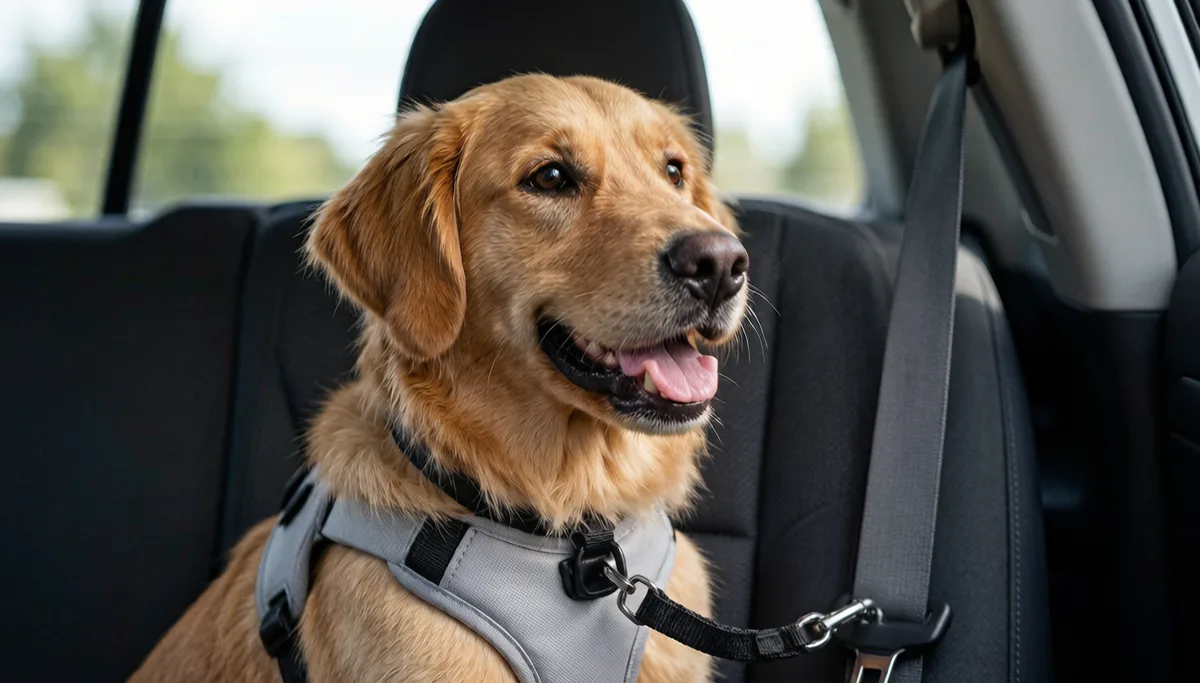
The standout was a harness built around a broad, padded chest plate and a short, fixed nylon tether that clips straight into the seat-belt receiver. On hard braking it kept a 60-lb test dog upright and in place; on a simulated sudden stop it held without stretching or detaching. The chest plate spread the load instead of concentrating it on the neck, which is the failure point on collar-based loops.
What we set aside: a popular “seat-belt loop” that used a long elastic lead (the dog slid to the floor on a hard stop) and a vest that looked sturdy but had no published crash data and a tether that unclipped under lateral load.
How we tested
We didn’t have a crash lab, so we scored what matters to a real owner and cross-checked the results against published safety research:
- Fit and escape-proofing — can a wriggly dog slip a shoulder loop?
- Tether length and stretch — short and fixed beats long and bungee.
- Attachment point — harness (good) vs collar (bad).
- Crash credentials — does the maker cite a specific test, or just say “safe”?
- Everyday use — easy to clip in, comfortable enough that the dog doesn’t fight it.
We also reviewed the Center for Pet Safety’s crash-test program, which has studied pet harnesses and carriers since 2013 and found that several widely sold restraints fail dynamic impact testing. That research shaped our shortlist: if a product can’t point to a real crash standard, it didn’t make the cut.
Compared
| Restraint type | Holds in a hard stop? | Neck safety | Best for |
|---|---|---|---|
| Crash-rated harness + short fixed tether | Yes | Load spread on chest | Medium/large dogs, daily drives |
| Crash-tested anchored carrier | Yes (when strapped down) | N/A (enclosed) | Small dogs, anxious travelers |
| Long elastic seat-belt loop | No — slides/bungees | Poor (collar clip) | Trips to the vet only |
| Unrated vest + loose tether | Unverified | Depends | Not recommended |
What to look for
- A real crash credential. A maker that cites a specific test (CPS, or an equivalent dynamic standard) is signaling it survived impact testing. Vague “crash tested” with no detail is a red flag.
- A short, fixed tether. Two to four inches is plenty. Long tethers let the dog build momentum.
- Harness, not collar. Force belongs on the chest, never the throat.
- Broad, padded chest panel. Spreads load and stops the dog from rotating into the seatback.
- Metal, not plastic, clips at the high-stress connection points.
Who it’s for
- Daily commuters with a dog — a crash-rated harness you leave clipped is the lowest-friction safe habit.
- Road-trippers — pair the harness with a anchored carrier for breaks and overnights.
- Anxious or carsick dogs — a snug, fixed restraint reduces sliding, which calms a lot of dogs more than a loose “freedom” setup.
Pros and cons
Pros
- Keeps your dog from becoming a projectile in a sudden stop.
- Prevents distracted driving — no dog in your lap or under the pedals.
- A fixed tether is faster to clip than buckling a squirming dog into a crate every trip.
Cons
- Crash-rated harnesses cost more than a $10 seat-belt loop.
- Sizing has to be right; a loose harness defeats the whole point.
- Some dogs need a week of short trips to accept wearing it.
Keep reading
- Crate alternative for longer trips → Best Dog Crates
- Everyday walking harness → Best No-Pull Dog Harness
- Paw protection for pit stops → Best Dog Boots
Frequently asked questions
Are dog car harnesses actually crash tested?
Some are, some aren't. Independent groups like the Center for Pet Safety have run dynamic crash research on pet harnesses and carriers since 2013, and their results show that many popular restraints fail or detach in a simulated impact. Look for a restraint that cites a specific crash-test standard or certification rather than vague 'safety' language.
What is the safest way to restrain a dog in a car?
A crash-rated harness clipped to a short, fixed seat-belt tether in the back seat is the most reliable setup for medium and large dogs. Small dogs and anxious pets are often safer in a crash-tested, anchored carrier or crate. The key is a short tether — a long one lets the dog build momentum and still get thrown.
Why not just use a regular seat belt with a loop?
Most 'seat-belt loop' restraints use a long, elastic or loose attachment that lets a dog slide off the seat or, worse, bungee forward in a crash. They also tend to clip to a collar rather than a harness, which concentrates force on the neck. A fixed, harness-based tether is the meaningful upgrade.
Should the dog ride in the front seat?
No. A front-seat dog is in the path of an airbag, which deploys with enough force to injure or kill a pet. Keep restraints in the back seat, ideally behind the driver where you can glance at them without turning your head.
References: Center for Pet Safety — pet restraint crash-test research .