Dog Nail Grinder vs Clippers: Which Is Safer to Use at Home?
Updated 2026-08-31 · HappyPawPicks Editorial
HappyPawPicks is reader-supported. Some of our recommendations include affiliate links. If you buy through them, we may earn a commission — at no extra cost to you. As an Amazon Associate I earn from qualifying purchases. Our editorial process is independent and never influenced by commissions.
Bottom line: a nail grinder is the safer choice for most owners because it removes nail a tiny bit at a time, making it far harder to hit the quick — but clippers are faster and better if your dog is calm and you’re experienced. Pick based on your dog’s temperament and your confidence, not the marketing.
Why the quick matters
Inside every dog nail is the quick — a bundle of blood vessels and nerves. Cut into it and you get bleeding and pain. Clippers remove a chunk in one snip, so a small misjudgment hits the quick. A grinder sands the tip down gradually, so you stop well before you reach it. That single difference is why grinders win on safety for beginners.
Grinders: the forgiving option
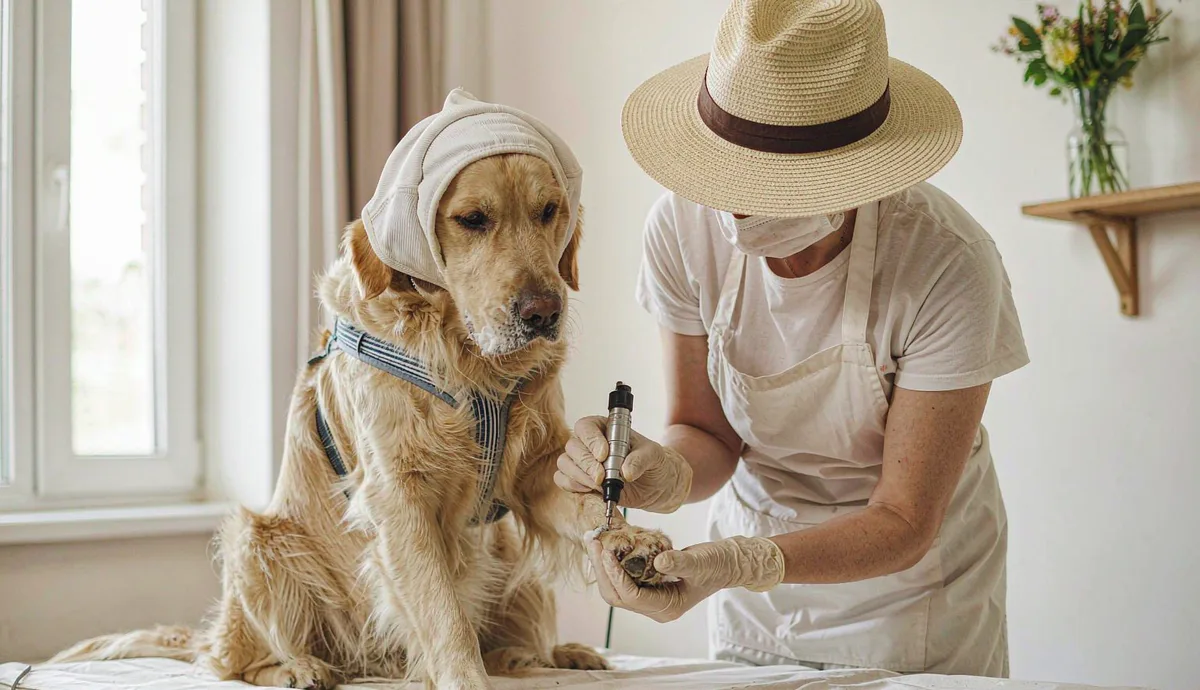
A rotary grinder (think a gentle Dremel-style tool made for pets) lets you shorten nails in thin passes and smooth rough edges so they don’t snag. Pros:
- Low risk of the quick — you control depth in tiny steps.
- Smooth finish — no sharp corners to scratch you or the couch.
- Good for thick or black nails where the quick is hard to see.
Cons: noise and vibration can spook nervous dogs, and it takes longer per paw.
Clippers: the fast option
Scissor-style or guillotine clippers take a clean cut in one motion. Pros:
- Quick session — better for dogs that won’t sit still.
- Cheap and simple — no charging, no noise.
- Precise once you can see the quick.
Cons: one wrong squeeze goes too deep, and black nails make the quick invisible.
Which should you buy
- Nervous dog or first-timer → grinder. The safety margin is worth the longer session.
- Calm dog, experienced owner → clippers. Faster and quieter.
- Very small breeds → clippers sized for toy breeds, or a grinder with a low-speed setting.
- Thick black nails → grinder, since you can’t see the quick.
A safe routine that works for both
- Handle your dog’s paws daily for a week so they’re used to it.
- Trim one or two nails, then treat — don’t do all four at once early on.
- If using clippers, take off only the hooked tip; when in doubt, less is more.
- Keep styptic powder nearby in case you do nick the quick.
- Pair nail care with a no-pull harness for calmer walks and a durable leash so grooming sessions aren’t a wrestling match.
Don’t overthink the brand
A mid-range pet grinder with two speed settings and a quiet motor beats a budget one that scares the dog. For clippers, sharp replaceable blades matter more than features. The ASPCA and AKC both publish free nail-care guides (linked above) — read those before your first try rather than learning by accident.
Keep reading:
Frequently asked questions
Is a nail grinder safer than clippers?
Generally yes for beginners. A grinder shaves a little at a time, so the risk of cutting the quick (the blood vessel inside the nail) is much lower than with clippers, which can take too much in one snip.
Will the grinder scare my dog?
Some dogs dislike the buzz and vibration. Introduce it with the tool off, reward calm behavior, then do a few seconds at a time. Many dogs tolerate it better than the pinch of clippers once they're used to it.
How often should I trim my dog's nails?
Usually every 3–4 weeks, but it depends on wear from walks. If you hear clicking on hard floors, they're too long. Ask your vet for a demo on finding the quick if you're unsure.
References: AKC: trimming your dog's nails, ASPCA: nail care basics .