Pet First-Aid Kit Checklist: What Actually Belongs in the Box (2026)
Updated 2026-08-02 · HappyPawPicks Editorial
HappyPawPicks is reader-supported. Some of our recommendations include affiliate links. If you buy through them, we may earn a commission — at no extra cost to you. As an Amazon Associate I earn from qualifying purchases. Our editorial process is independent and never influenced by commissions.
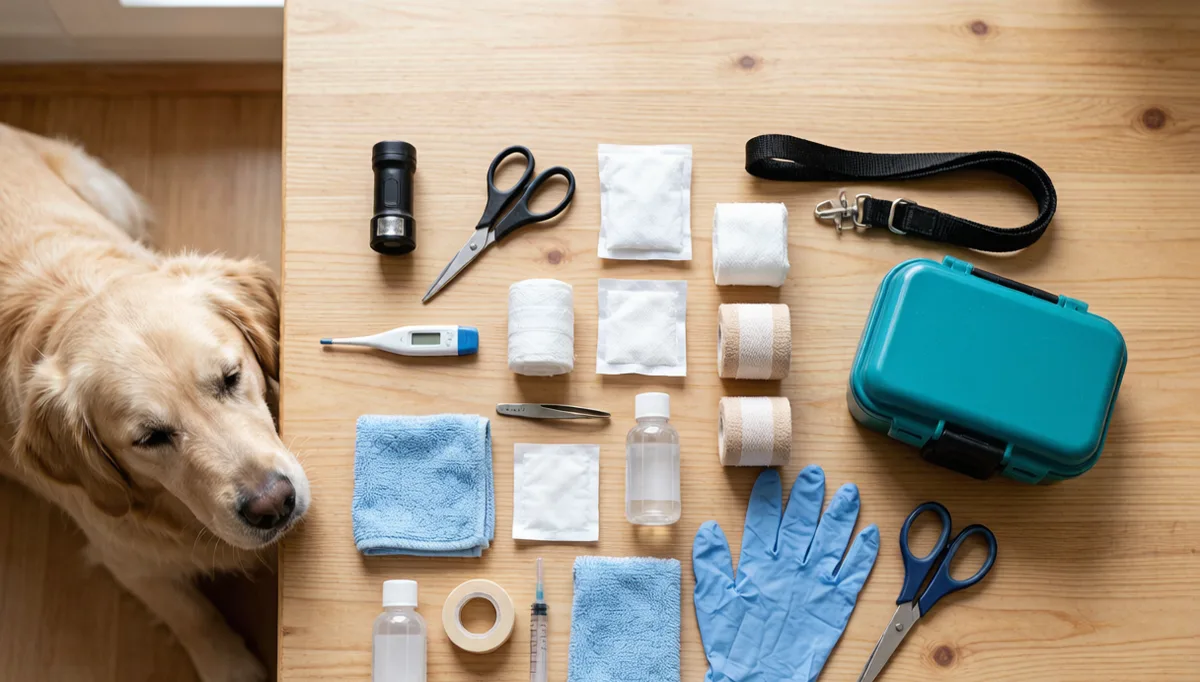
Most pet first-aid lists online are inventory dumps: forty items, no priorities, no explanation of what each one is for. That’s how people end up with a bulging box that’s missing a muzzle.
Here’s the same kit organised by the job each item does — plus the handful of things vets specifically warn against.
Job 1: Stop the bleeding
| Item | Why it’s in the kit |
|---|---|
| Sterile gauze pads and gauze roll | Direct pressure on a bleed; the roll also works as an emergency muzzle |
| Non-stick pads or clean cloth strips | Cover a wound without bonding to the tissue |
| Self-adhering wrap (the kind that sticks to itself, not fur) | Holds a dressing in place without tape on skin |
| Adhesive tape | Secures the bandage edge |
| Blunt-tipped scissors | Cut wrap and trim fur around a wound without stabbing a squirming animal |
| Styptic powder | Stops a nail cut too short — a genuinely common household bleed |
The technique matters more than the supplies. Apply firm direct pressure with a clean pad and hold it for at least three full minutes before you peek. If the dressing soaks through, add another layer on top — don’t peel the first one off, because that strips the clot you just built. Bleeding that doesn’t slow after direct pressure is a drive-to-the-clinic-now situation, not a bandage situation.
Job 2: Clean and protect
| Item | Why it’s in the kit |
|---|---|
| Sterile saline solution | Flushing wounds, rinsing grit out of eyes. Contact-lens saline works |
| Pet-safe antiseptic (chlorhexidine-based) | Cleaning a wound without damaging tissue |
| Large syringe or eye dropper (no needle) | Directed flushing; also for giving oral liquids |
| Disposable nitrile or latex gloves | Protects the wound from you, and you from the wound |
| Petroleum jelly | Lubricates a thermometer; protects wound margins |
| Tweezers and a tick removal tool | Splinters, thorns, and ticks removed whole rather than in pieces |
Pulling ticks off properly matters year-round in most regions — and if you’re finding them regularly, the kit is treating a symptom. Our guide to the best flea and tick treatment covers the prevention side.
Job 3: Control the animal safely
This is the section people skip, and it’s the one that prevents the second injury of the day.
- Muzzle — a pet in pain bites, including the gentle ones, including yours. Never muzzle an animal that is vomiting, choking, or struggling to breathe. A rolled gauze strip works if you don’t have a proper muzzle.
- Spare leash and collar — collars snap, and a loose panicked dog near traffic turns one emergency into two.
- Thick towel or blanket — restrains a cat, keeps a shocked animal warm, and doubles as a stretcher for a small dog.
- Carrier for cats and small dogs; a board, sled, or rigid blanket for large dogs. Confining an injured animal in a small space prevents it from worsening the injury.
Job 4: Get information to the vet fast
At 2am, with a bleeding animal in the back seat, nobody remembers a phone number. Put these on a laminated card inside the kit, not just in your phone:
- Your regular vet
- The nearest 24-hour emergency clinic — look this up before you need it
- ASPCA Animal Poison Control Center: (888) 426-4435 — staffed around the clock; a consultation fee may apply (ASPCA)
- A printed copy of vaccination records, current medications, and known allergies
- A recent photo of your pet — for identification if they bolt during the emergency
Add a digital thermometer and a small flashlight to this section. Normal temperature for dogs and cats is roughly 100.5–102.5 °F (38.1–39.2 °C), taken rectally with lubricant. “My dog is at 104” is a far more useful sentence to a triage nurse than “my dog feels hot.”
The three items people get wrong
1. Hydrogen peroxide. Three-percent hydrogen peroxide belongs in the kit for exactly one purpose — inducing vomiting — and only when a vet or poison control tells you to. For caustic substances and petroleum products, vomiting causes a second round of damage on the way back up. And per AVMA guidance, do not use hydrogen peroxide on wounds — it damages healthy tissue. Saline cleans wounds; peroxide doesn’t.
2. Human adhesive bandages. They don’t adhere to fur, they come off within minutes, and pets swallow them. Use non-stick pads plus self-adhering wrap instead.
3. Medications without a dose. Diphenhydramine, activated charcoal, and milk of magnesia all appear on official checklists — including the CDFA CARES kit list — with the same caveat attached: only if your vet has approved them and given you a dose for your specific animal. Ask at your next routine visit and write the dose on the bottle in permanent marker. An unlabelled bottle of Benadryl in a first-aid kit is a guess waiting to happen.
The first 60 seconds: four scenarios
Heavy bleeding. Direct pressure with a clean pad, at least three minutes, layers added on top rather than swapped. Then drive.
Burn. Muzzle first if the animal is conscious and not vomiting, then flush with cool — not ice-cold — water. No ointments, no butter, no ice. Then drive.
Heatstroke. Get out of the sun. Wrap a cool wet towel around the neck and head, leaving eyes, nose, and mouth clear, and re-wet it every few minutes. Run cool water over the body, especially the belly and inner thighs, sweeping it away with your hands as it warms. Then drive — heatstroke damage continues after the temperature drops.
Suspected poisoning. Call before you act: your vet or the ASPCA APCC number above. Have the packaging in hand. Do not induce vomiting on your own judgement.
In all four, the same rule applies: first aid is the bridge, not the destination. Every one of these ends at a clinic.
Storing and maintaining the kit
Use a labelled, waterproof container. Keep the full kit at home somewhere every adult can find it and no pet can chew it. Keep a lighter duplicate in the car — walks, hikes, and road trips are where a surprising share of emergencies happen.
Set a twice-yearly reminder to check expiry dates on saline, hydrogen peroxide, and any medications, and to replace whatever you used. A kit you assembled in 2022 and never opened is probably half-expired.
One more piece of preparation that isn’t in the box: know what an emergency visit costs where you live, and decide in advance how you’d cover it. Emergency care routinely runs into four figures, which is the whole argument for looking at pet insurance before you need it — and for keeping vaccinations current, since several of the worst emergencies are preventable ones.
Bottom line
Four jobs, one box: stop the bleeding, protect the wound, control the animal, reach the vet. Add a muzzle even if your pet has never growled. Write the poison control number on a card and put it inside the kit. Keep hydrogen peroxide, but treat it as a phone-call-first item, never a wound wash. Then build the second kit for the car — that’s the one you’ll actually reach for.
FAQ
- Q: What should be in a pet first aid kit? A: Organise it by job — gauze, non-stick pads, self-adhering wrap, tape and blunt scissors for bleeding; saline, pet-safe antiseptic, a flushing syringe and gloves for cleaning; a muzzle, spare leash, towel and carrier for control; and vet numbers, the ASPCA APCC line at (888) 426-4435, printed records and a photo for getting help. Add a digital thermometer, tweezers, a tick remover, styptic powder and a flashlight.
- Q: Should I give my dog hydrogen peroxide? A: Only to induce vomiting, and only when a vet or poison control directs you to — it’s the wrong move for caustics and petroleum products. Never use it on a wound; it damages healthy tissue. Saline or a pet-safe antiseptic is the correct wound cleaner.
- Q: Is a human first aid kit good enough for a dog or cat? A: About two-thirds of it transfers. You still need the animal-specific half: muzzle, spare leash, rectal digital thermometer, tick tool, styptic powder, and the emergency numbers. Leave human adhesive bandages out — they don’t stick to fur and pets swallow them.
- Q: How do I take my pet’s temperature at home? A: Rectally, with a lubricated digital thermometer. Normal is roughly 100.5–102.5 °F (38.1–39.2 °C). Above ~103 °F warrants a call; above 104 °F with heat exposure is an emergency, and below 99 °F often signals shock.
- Q: Where should I keep a pet first aid kit? A: Two kits — a full one at home in a labelled waterproof container, and a lighter one in the car, since many emergencies happen away from home. Review both twice a year for expiry dates and used supplies.
Keep reading
- Best Flea and Tick Treatment (2026)
- How Often Should You Vaccinate Your Dog?
- Best Pet Insurance (2026)
Frequently asked questions
What should be in a pet first aid kit?
Build it around four jobs. To stop bleeding: gauze pads, gauze roll, non-stick bandages, self-adhering wrap, adhesive tape, blunt-tipped scissors. To clean and protect: sterile saline, a pet-safe antiseptic, a syringe or eye dropper for flushing, disposable gloves. To control the animal safely: a muzzle, a spare leash and collar, a towel or blanket, a carrier for cats and small dogs. To get help fast: your vet's number, the nearest 24-hour emergency clinic, the ASPCA Animal Poison Control Center at (888) 426-4435, a printed copy of your pet's records, and a current photo. A digital thermometer, tweezers, a tick remover, styptic powder, and a flashlight round it out.
Should I give my dog hydrogen peroxide?
Only to induce vomiting, and only when a veterinarian or a poison control centre tells you to. Three-percent hydrogen peroxide is the standard at-home emetic, but inducing vomiting is the wrong move for several categories of poison — caustics and petroleum products among them — and it can cause more damage on the way back up. Never use hydrogen peroxide on a wound: it damages healthy tissue and slows healing. Sterile saline or a pet-safe antiseptic is the correct wound cleaner.
Is a human first aid kit good enough for a dog or cat?
Roughly two-thirds of it transfers. Gauze, tape, scissors, gloves, saline, and a flashlight all work fine. What's missing is the animal-specific half: a muzzle, a spare leash, a rectal-capable digital thermometer, a tick removal tool, styptic powder, and the phone numbers that matter at 2am. Human adhesive bandages are the one item to leave out — they don't stick to fur, and pets pull them off and swallow them.
How do I take my pet's temperature at home?
Rectally, with a lubricated digital thermometer — ear thermometers are far less reliable in animals. Normal for dogs and cats sits between roughly 100.5 and 102.5 °F (38.1–39.2 °C). Above about 103 °F warrants a phone call, and above 104 °F with heat exposure should be treated as an emergency. Below 99 °F is equally serious and often signals shock. Ask your vet to demonstrate the technique once at a routine visit; it takes thirty seconds and removes the guesswork.
Where should I keep a pet first aid kit?
Two kits, not one. A full kit at home in a labelled waterproof container, stored where every adult in the household can find it but pets and small children can't. A lighter travel kit stays in the car, because a meaningful share of pet emergencies happen on walks, hikes, and trips. Review both twice a year: check expiry dates on saline, hydrogen peroxide, and any medications, and replace whatever you used.
References: AVMA — Pet first aid supplies checklist, ASPCA Animal Poison Control Center, CDFA CARES — Pet First Aid Kit Checklist (PDF), American Red Cross — Pet disaster preparedness .